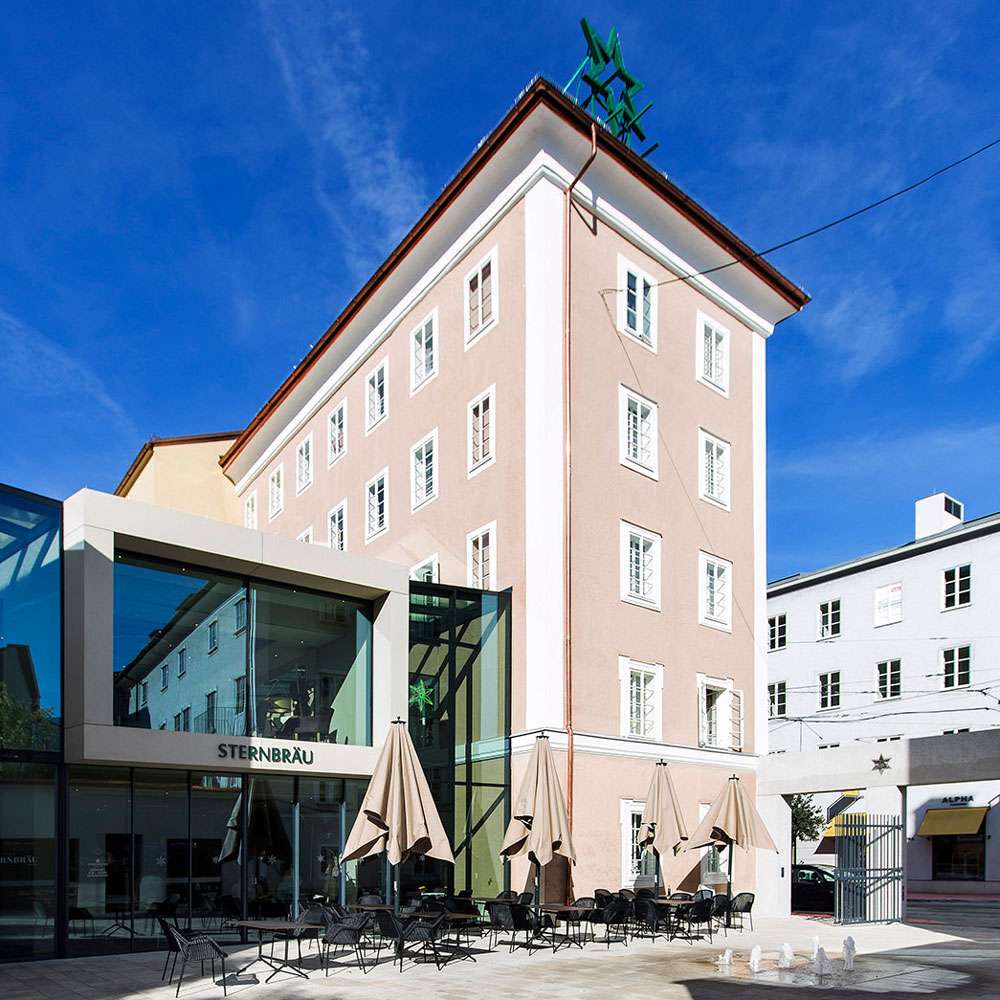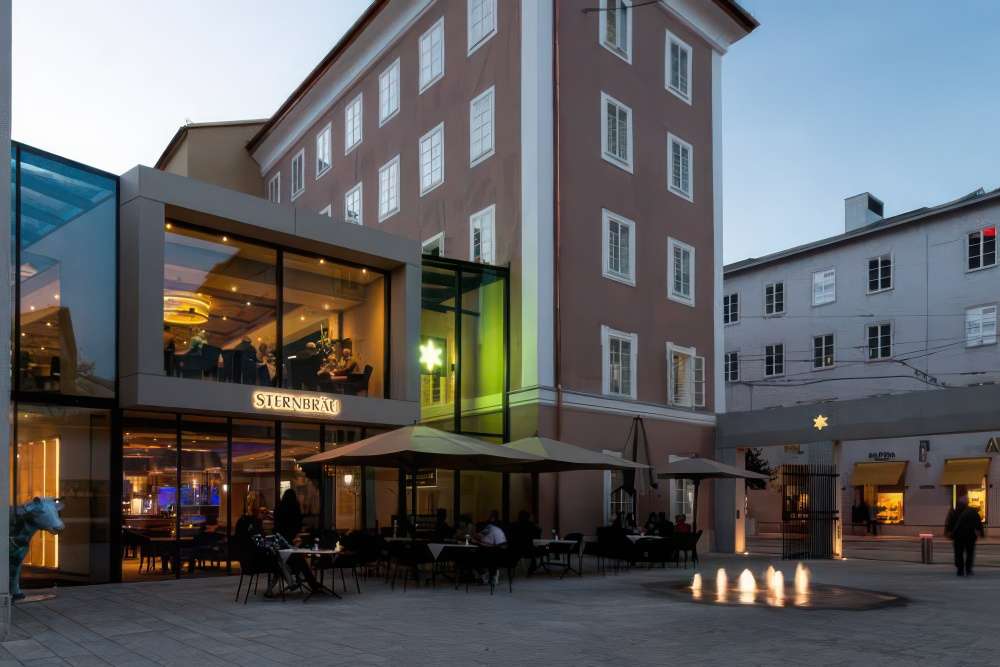

Experience a Relaxing Break at the Sternbräu
The Sternbräu surprises with a spectacular ambiance, delicious Sternbier, and sophisticated Austrian cuisine.
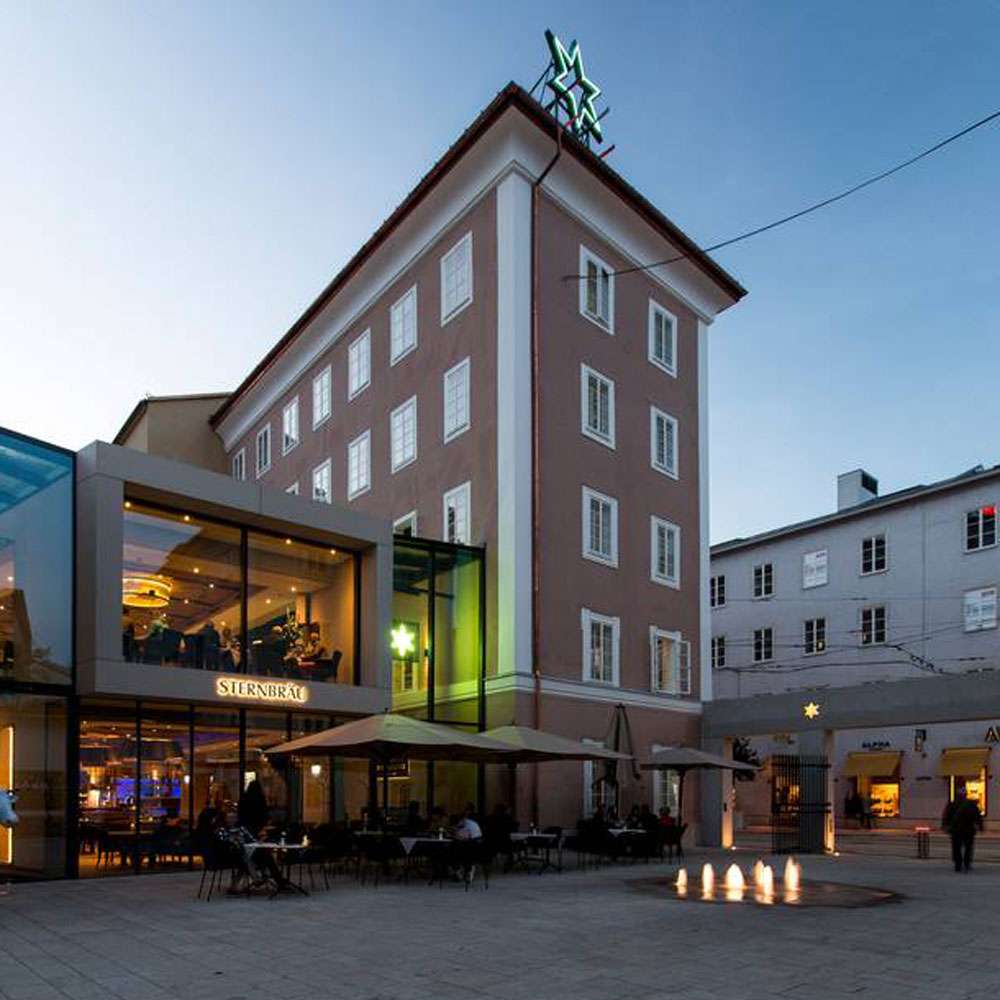
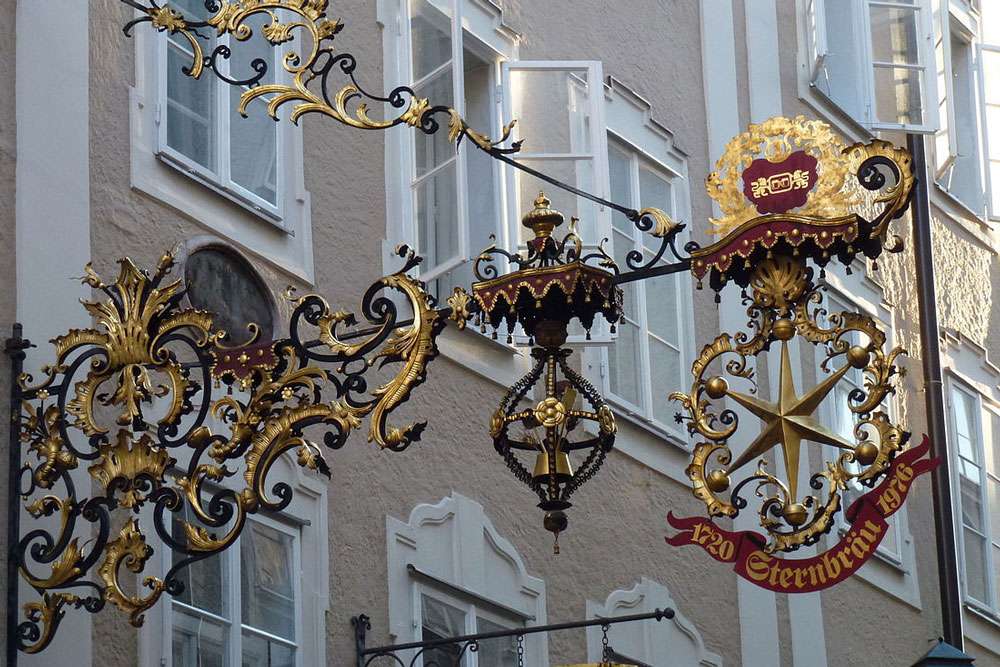
The Sternbräu - A Total Work of Art
For centuries, history has been written at the Sternbräu Salzburg tavern. First mentioned in documents as a brewery with a guest house in 1542, the establishment has continuously evolved over the centuries—while preserving its unique character. Wolfgang Amadeus Mozart is documented to have visited the Sternbräu around 1777. To this day, the Sternbräu remains a meeting point for people from all over the world—our regular guests have included, among others, the former German Chancellor Angela Merkel.
With approximately 780 indoor seats, 670 garden seats, and over 130 employees from more than 20 nations, the Sternbräu is today one of Austria's largest and most renowned gastronomic establishments.
Tradition
For centuries, the Sternbräu has been a place of encounter and enjoyment. We preserve what makes our establishment special while simultaneously continuing to develop it. In this way, historical rooms and Salzburg tavern culture combine with contemporary ideas and new gastronomic concepts.
Regionality
Regionality begins with the selection of our products and partners. We prefer regional foods, maintain long-standing partnerships, and rely on high-quality products. Equally important to us are respectful interactions with one another and a conscious use of resources.
Tolerance
With over 130 employees from more than 20 nations, we practice multiculturalism and tolerance daily. Different cultures and experiences enrich our cooperation and bring intercultural diversity to our daily work. Despite all internationality, we are fully committed to the Salzburg culinary tradition!
Balance
Satisfied employees are the cornerstones of a successful company. The Sternbräu stands for a healthy work-life balance and combines traditional values with progressive, modern ways of thinking. Qualified employees are given many opportunities to flourish and develop further with us. They are both supported and challenged in equal measure.
Diversity
Hardly any other gastronomic establishment offers so many different possibilities under one roof. Historical parlors, spacious rooms, modern locations, and three guest gardens create very different atmospheres—from a cozy dinner to a large celebration. This diversity makes the Sternbräu a house for a wide variety of guests and occasions.
Quality
In all our entrepreneurial decisions, we literally look beyond the edge of the plate. Food and drinks of the highest quality, as well as fast and expert service, are a matter of course for us. Especially in this day and age, however, it is also about that certain something—the added value beyond the usual. This is what we want to offer our guests every day.
For Almost 500 Years
The Exciting History of the Sternbräu
The Birth.
The exact hour of our establishment's birth lies, as is so often the case with historical buildings, in the dark. Our house chronicle presumably dates back to the Middle Ages.
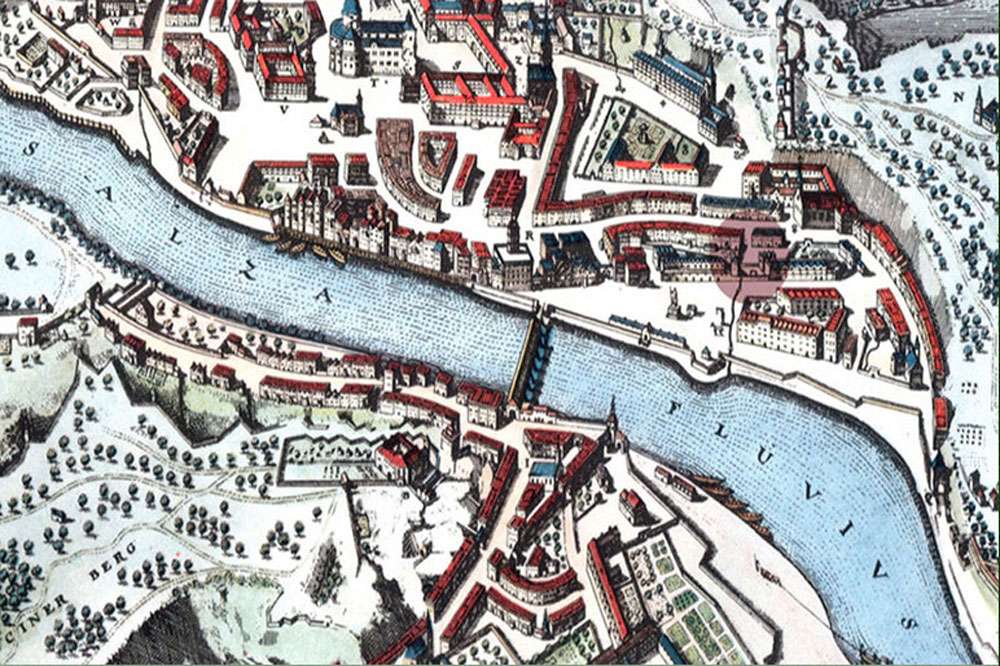
It is certain that there were numerous small breweries in the city of Salzburg in the late 16th century. The name "Sternbräu" as a dedicated brewery with a tavern was first mentioned in 1542. That is why we write "Since 1542" today, although the history of our house may go back even further.
Incidentally, the star as a guild symbol for brewers was first documented in 1425. It can still be seen frequently today at Franconian home breweries. The star as a striking symbol of the Sternbräu stems from this centuries-old tradition.
The Childhood.
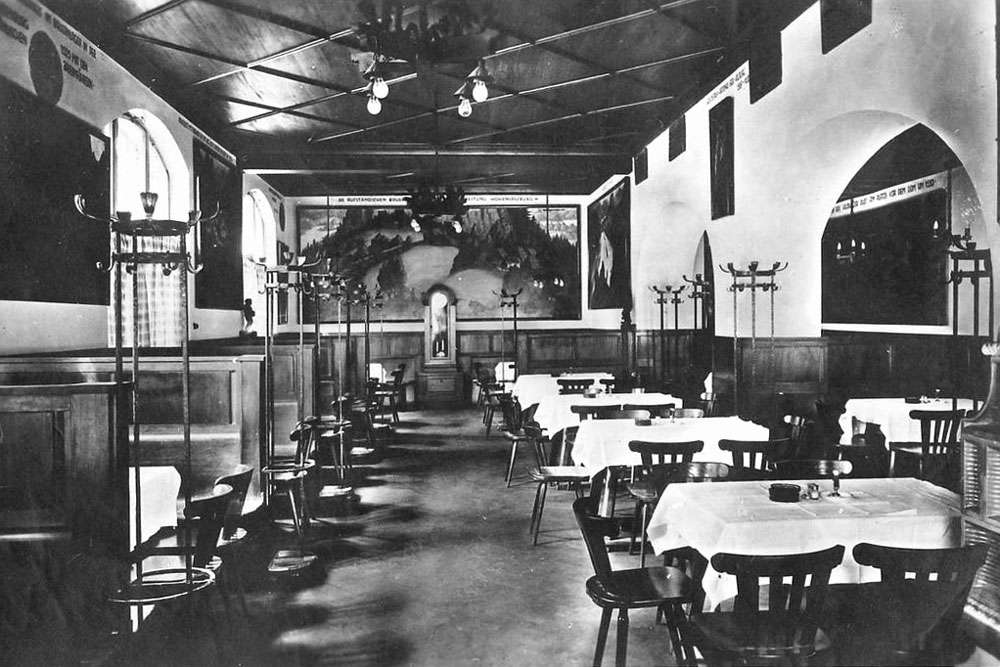
None other than Wolfgang Amadeus Mozart spent many hours at the Sternbräu, particularly in 1777. In 1810, the establishment was called the "Golden Star." In 1929 or shortly before, the large-scale murals by the Upper Austrian-Salzburg artist Karl Reisenbichler (1885-1962) were created; according to some sources, he painted these for the Sternbräu in exchange for room and board. These can be admired today in the renovated Bürgersaal.
The history of the city's civic culture is reflected in the Bürgerstube of the Salzburg Sternbräu. Anyone viewing the extensive cycle of paintings by Karl Reisenbichler from around 1924 [some paintings are dated 1929, note by Sternbräu] can read the history of the Archdiocese of Salzburg like an open picture book. During the economically very difficult interwar period around 1924 [see note above], the painter Karl Reisenbichler was commissioned to design a wall-covering oil painting cycle for the newly built "Bürgersaal" in the Sternbräu. "For room and board," he created eight historical paintings depicting the peasant uprisings, the Salzburg Dult (traditional fair), the procession of merchants over the Radstädter Tauern, and the burning of a witch on the Kapuzinerberg. (Source: Salzburg-Wiki)
The Youth.
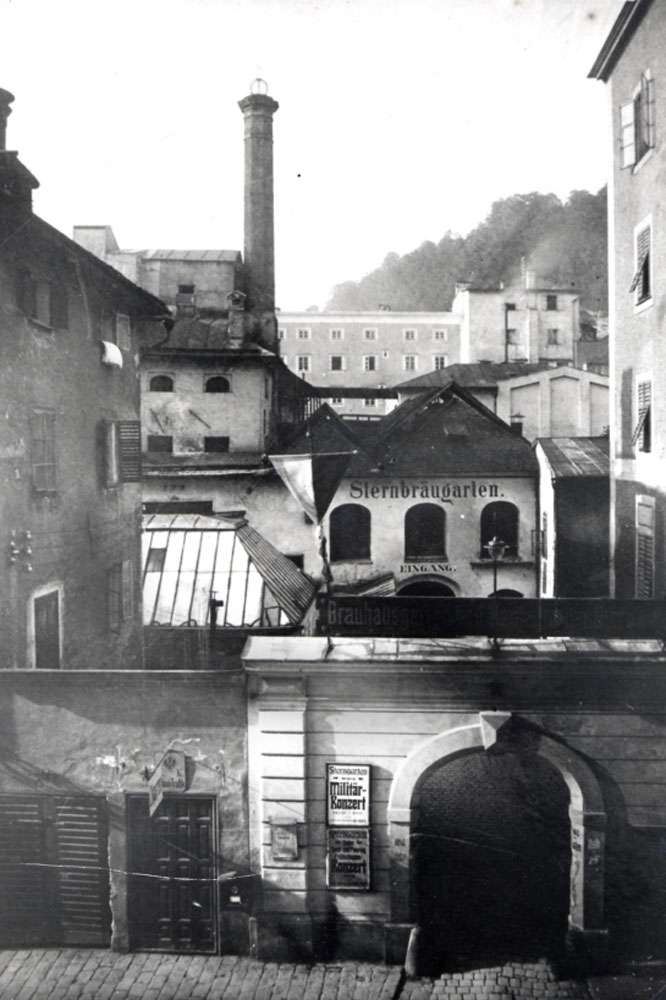
In 1907, the brewery was moved to the Riedenburg district behind the Neutor. Between 1929 and 1931, the business, which had meanwhile been purchased by Österreichische Brau-AG, was expanded into a "large-scale inn." In 1956, the last bottle of Sternbier was produced at the "Sternbrauerei" in Riedenburg; today, luxury apartments are located there.
Early Adulthood.
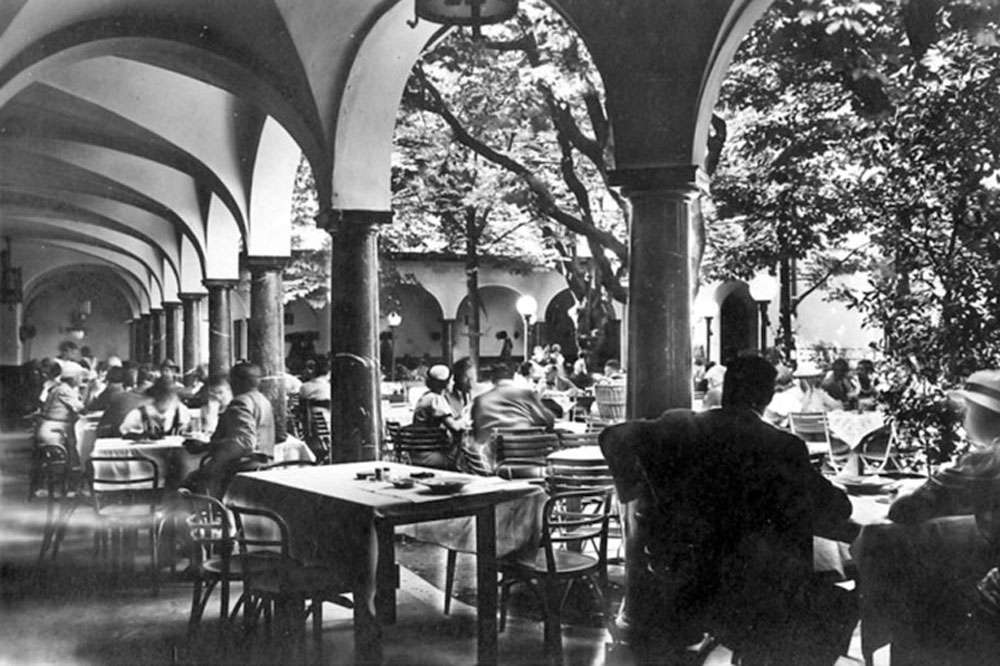
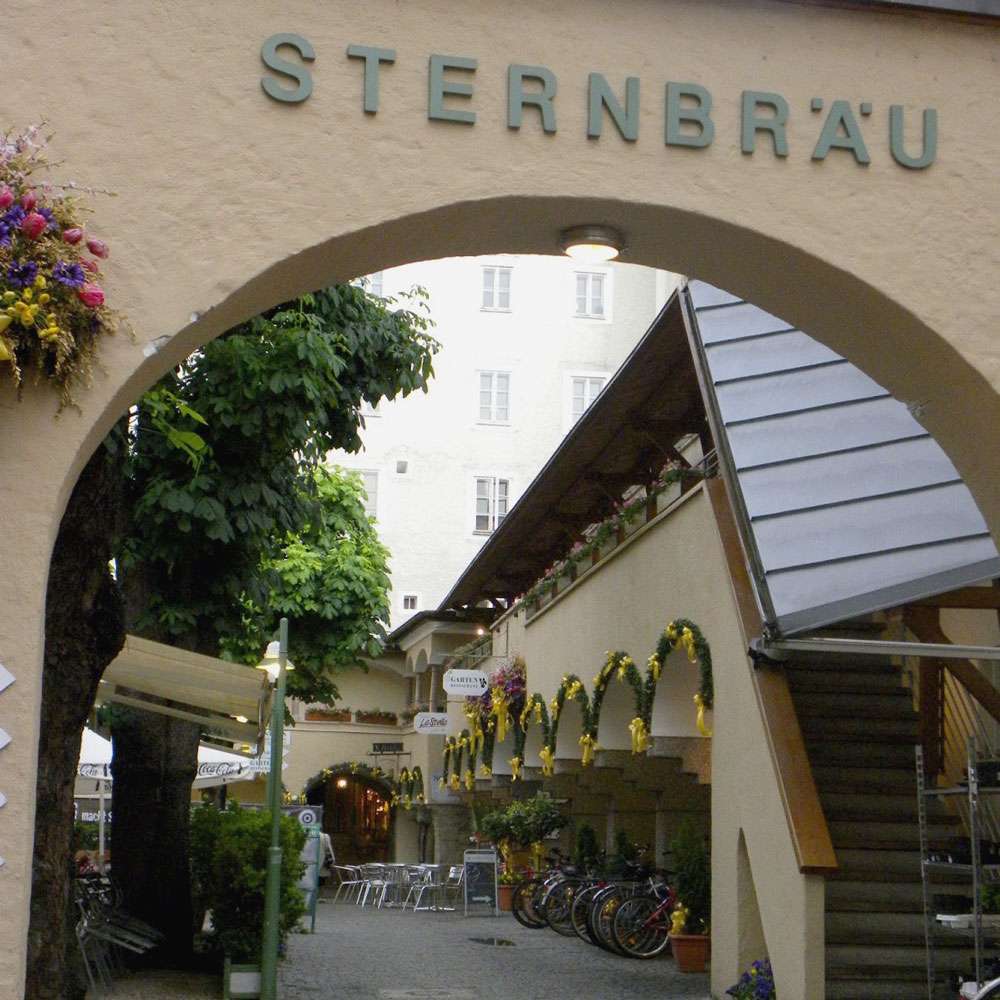
Until the end of the 1970s, the changing innkeepers at the Sternbräu large-scale inn primarily looked after the physical well-being of the guests. In 1979, a new phase of expansion began: Salzburg's first beer pub opened with the "Braumeister." Extensive renovation work was carried out between 1986 and 1988. The Stern beer garden was given a new look, and the "Trattoria La Stella" was opened.
From the year 2000, the newly adapted Sternsaal developed into a sought-after culture and event center in Salzburg's Old Town through theater and cabaret performances as well as the well-known "Sound of Salzburg Dinner Show." In 2006, Mag. Harald Kratzer took over the traditional Sternbräu company. In 2007, entirely new target groups were addressed with the opening of the Abendstern Bar. In 2008—after a 53-year hiatus—a specially produced Sternbier was once again available at the Sternbräu.
Expansion and Starting a Family.
In 2010, Salzburger Immobilien Bauträger AG became the new owner and began, together with the operators, to attractively expand the Sternbräu. In 2011, the "Gwölb an der alten Stadtmauer" was created on the ground floor.
At the beginning of 2013, the largest renovation phase in the history of the Sternbräu to date began. The venture of balancing contemporary architecture with the preservation of traditional and, in some cases, heritage-protected rooms was undertaken. Meanwhile, the operator took over the Gablerbräu in the Linzergasse (right side of the Old Town) as a subsidiary, another traditional Salzburg establishment.
The Sternbräu reopened on October 1, 2014, after a 22-month renovation period with a large celebration. A new urban hub was created with a variety of gastronomic offerings for all target groups. Salzburg's Old Town, considered by many to be the most beautiful "shopping center" in the world, was enriched by a novel gastronomic heart.
And the Sternbräu had children: SternLounge, SternZeit, the Trattoria La Stella, and the Stern beer garden with the Stern-STÖCKL became establishments with their own positioning and appearance.
Since 2025, beer and selected other beverages have been sourced from the Salzburg private brewery Stiegl—Sternbier is now brewed in organic quality exclusively for the STERNBRÄU.